
Automated Gatekeeping: Job Searching While Black, Older, and Experienced
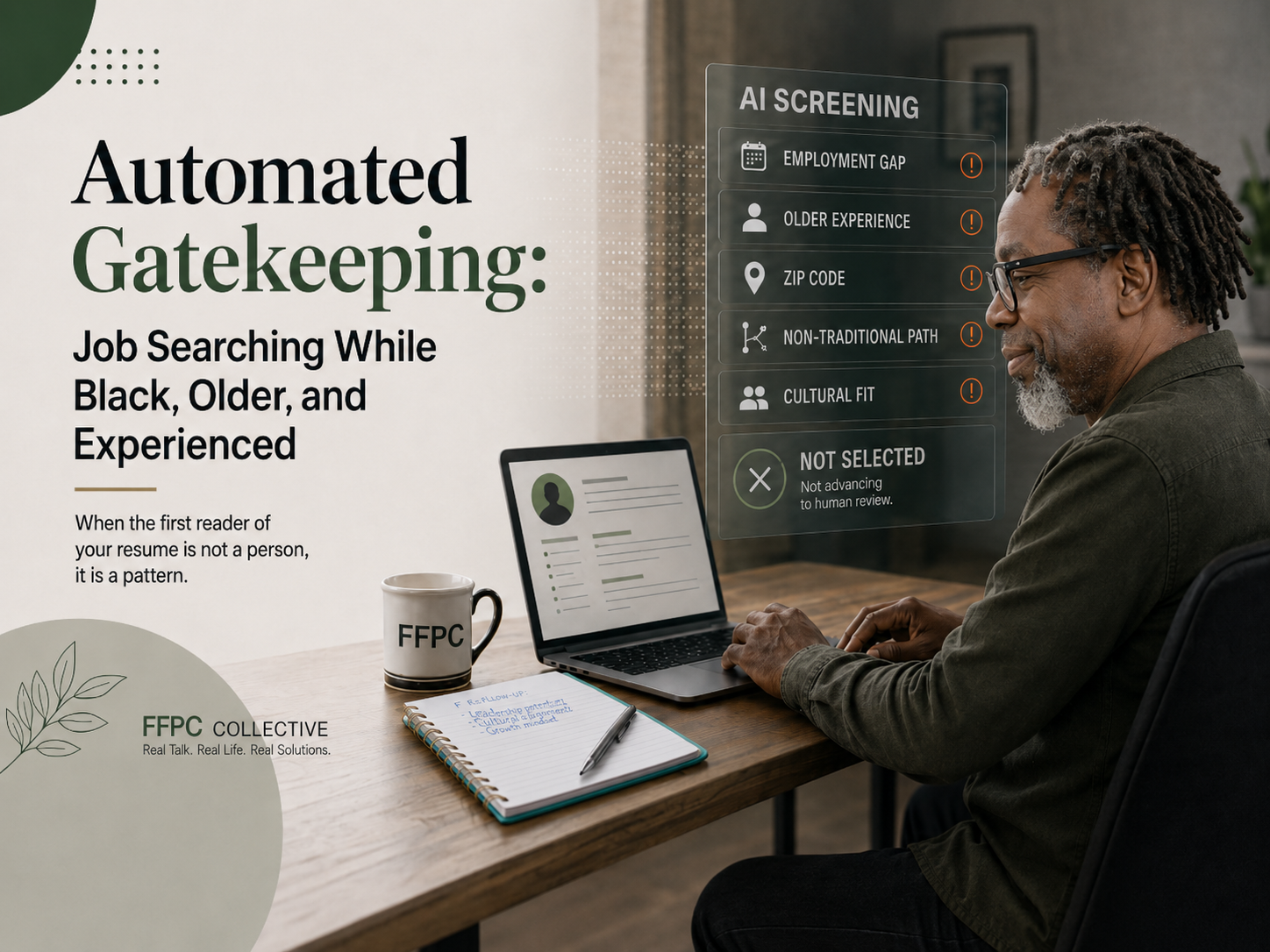
Dealing with being laid off has brought me to the point of dealing with the modern job search. Gone are the days of printing multiple copies of my resume and mailing them to companies and hoping for the best. Today, AI has replaced an overworked HR manager in looking at resumes. On the surface, one would think racial bias is not part of the equation. Looking deeper, it’s the same problem with a different look. I am not saying machines are being built to “hate” anybody, but repeating any pattern it was trained to see.
In the beginning, job searching online was just annoying and impersonal. Just check the usual boxes and keep moving. Slow and tedious. Then I started to think: the system may not just be slow or frustrating, it may be filtering people before they ever get seen. Not looking at things from a conspiracy point of view but just following the breadcrumbs of logic.
We all know job searching online means navigating through Indeed, LinkedIn, Glassdoor, and other online job sites resume sprucing, clicking on and applying into related jobs. Over the years I never thought about myself applying for dozens of jobs through this process containing any racial bias. Sure it came to my mind that a fifty-nine-year-old Black, experienced professional is not the cup of tea some companies are looking for. It never occurred to me that the AI models companies use to screen could be biased based on the criteria used to build them.
In other words, instead of a person weeding out people of color, gender, ethnicity, or other factors there is now an automated gatekeeper, especially if video is used as part of the interview process. So no matter how much tweaking I do to my resume to make it ready for the modern job search, if there is an inherent bias on the machine side, will I ever get a fair shot at any job?
Additionally, if there are only a few players in the game as far as the tools companies use to screen applicants, is that part of the problem? One example is noted in a 2026 paper on hiring practices that found racial disparities among applicants when AI screening tools were factored in. While those tools may not have been specifically built to flag race, age, and work gaps, who is responsible when issues arise? Is it the company who decided to adopt the tools without thinking of the implications or is it the tool provider for not using a wide enough pool to train the model with?
I have been spending quite a bit of time tweaking my resume to fit the modern job search. The main change has been in the terminology used to describe my career journey. In another post, Job Search: Don’t Be Intimidated By All The New Terms, I talked about mostly AI-related terms but terms like experiential retail, upskilling, and customer journey are now in play. While many terms on my resume are accurate, do they match the terms AI screening tools are built on? Are these new terms for a new job search coded in a way to work against me or have they always been there and I am being too sensitive?
How do modern screening tools used to screen applicants handle soft skills experienced workers have but may not use the latest terminology to describe them? Did the developers even consider this when training the system to move through the screening process? One example is active listening which is a skill acquired through experience and something I am not sure if machine learning models can pick up on. I don’t think it is intentional to not include soft skills into these tools, but if they have an issue recognizing things of this nature, that adds another layer of disconnect to the screening process.
On a personal note, has this revelation stopped my online job search? No it has not. What it has done is made me double down on other things. I make sure my resume is clean enough for the machine. I know job searching still needs human contact, referrals, follow-up, and real conversations whenever possible. In other words, no tool can replace me and I will never take what I bring to the table out of my current job search.
There have always been gatekeepers and I know there is no dark conspiracy against specifically older workers of color, but it does make me pause. If others besides younger white individuals are not used when AI tools are created then the tool is not biased; it is simply answering the “if” “then” equation it is built on. Older, black, experienced individuals like myself were not factored into the building phase so it makes sense I will never get past the front door if 98% of the screening process never reaches human eyes.
What is on the other side of this realization? I know on the one hand AI was not built to discriminate against anyone. On the other hand, I know I have to double down on my efforts to make sure my resume is the best it can be regardless of if a machine or man looks at my skills and experience to make the final decision on any job placement.
Moving beyond the bias scenario means making use of a few concepts to help with job searching and to prevent bias creep with the entire job search process. Below are a few I have used in my search. I am sure as I learn more this list will grow.
AI-Assisted Job Search Toolkit
- AI-assisted resume rewrites to create different versions for different industries
- Use AI to freshen up on current terminology
- Run your resume through several job sites’ writing tools to compare what is passable
- Create a spreadsheet/document to track applications
- Network offline
- Follow up both online and offline
- DO NOT LET AI WRITE YOUR ENTIRE RESUME