Maintenance Checklist for the First-Wave Gen X Body
There comes a point when the old tricks stop working the way they used to. You can still push through a long day, get things done, and tell yourself “I’m fine”—close enough to keep moving. But somewhere in midlife, the body starts adding footnotes: a stiff back after sitting too long, a headache that might be dehydration, a bad night’s sleep that turns into three days of brain fog, or knees that negotiate before they cooperate.
For those of us in the first wave of Gen X, wellness advice often showed up late. We were raised before step counters, giant water bottles, sleep trackers, and workplace wellness dashboards. Most of us learned to push through, keep moving, and not make a big production out of how we felt. That can build toughness, but it can also teach us to ignore the warning lights.
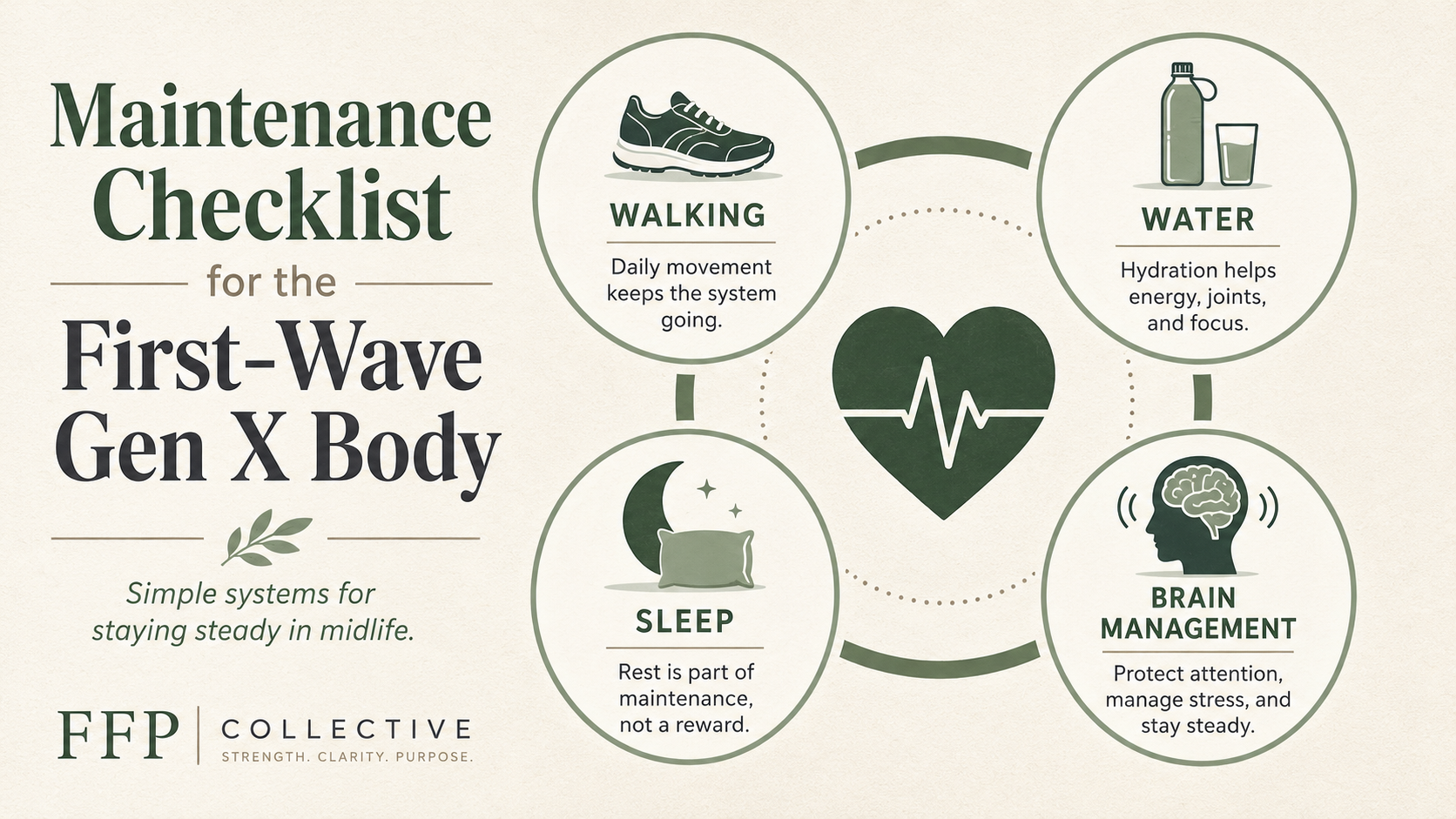
That is why walking, water, sleep, and brain management matter now. Not because we are trying to become wellness influencers, chase youth, or fix our whole lives by Monday. This is grown-folk maintenance, the kind that helps us stay present in our own lives with enough strength, clarity, and mobility to keep doing what matters.
When the warning lights came on in my truck, it felt like they came out of nowhere. But did they? Warning lights in the body can feel just as sudden, not because of some evil plot, but because we have grown accustomed to ignoring the earlier signs. Keeping a few basic maintenance items in mind can help us stay healthier and more present in our own lives.
Walking Is Not Punishment
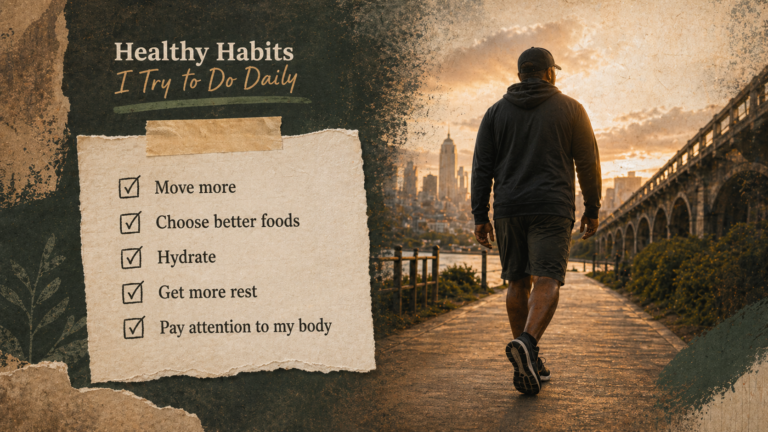
Many people think of walking as the beginner version of exercise, but that sells it short. For a lot of us, walking—or, as I like to call it, movement—is the most realistic place to start because it does not require a membership, a costume, or a personality transplant. You do not have to become a “fitness person” to take a walk around the block, through the store, at the park, or around the building before you go back inside.
It is not punishment for what you ate. It is not a confession. It is a way to keep the body from locking up, wake up the joints, move blood around, settle the nerves, and remind the brain that we are not furniture. Movement matters for anybody, but it matters even more when the body has old injuries, stress, and years of pushing through built into the frame.
For bigger bodies, movement counts even more. You do not have to walk fast enough to impress a smartwatch or match somebody else’s pace. The win is showing up in the body you have and giving it a little motion before stiffness starts making executive decisions. Some days that may be ten minutes outside, and some days it may be walking the aisles at the store with more intention than usual. Daily movement adds up over time. You may not notice much in the beginning, but before you know it, you are doing things you may have previously shied away from.
Hydration Is Boring Until You Need It
Water does not have good marketing. It has no crunch, no fizz unless you pay extra, and no childhood memory attached to it unless you count drinking from the hose. A lot of us grew up drinking Kool-Aid, sweet tea, soda, coffee, or whatever was cold. Nobody followed us around with hydration reminders, and nobody asked about electrolytes after we spent half the day outside.
Now the body is less forgiving. Not drinking enough water can contribute to tiredness, headaches, dry mouth, cramps, constipation, brain fog, or that dull “something is off” feeling that makes you blame everything except the empty glass sitting next to you. Sometimes age is part of it. Sometimes we have simply run the day on coffee, errands, stress, and half a glass of water.
The eight-glasses-a-day suggestion—and the latest internet trend of drinking a gallon—should not be the end goal. The goal is to stay hydrated, and what that looks like will differ from person to person. Paying attention to thirst and other signals from your body matters more than chasing somebody else’s number.
The point is not to turn water into a full-time job. Keep water where you already sit. Drink some before coffee or with coffee. Drink some with meals. Drink some before a walk and a little after. If plain water bores you, add lemon, cucumber, mint, frozen fruit, or use sparkling water if that helps. The win is giving your body enough fluid to work with before it has to send a strongly worded letter.
Sleep Is Not Laziness
Some of us were raised around people who respected work more than rest. You got up, went to work, handled your business, came home, and did what had to be done. Being tired was not always treated like information. It was treated like weakness, and that lesson can follow a person for decades.
Sleep is not laziness. Sleep is when the body does quiet repair work and the brain sorts, stores, clears, and resets. Bad sleep does not just make you sleepy. It can affect your mood, memory, appetite, and ability to make decent decisions. That becomes harder to ignore when the day already has regular life noise stacked on top of lack of sleep.
Midlife sleep can also get strange. Last night I was exhausted at 7:30 pm, wide awake at 11 pm, hot for no reason, freezing cold for no reason, and thinking about something from 1994. I never fully fell asleep and woke up extra crispy exhausted. Does that mean failure? Nope. It means sleep deserves attention before the whole day starts running on fumes. By the way, I am on fumes right now.
A better night’s sleep does not have to start with a dramatic routine. It might start with:
- Cutting caffeine earlier
- Dimming the house sooner
- Shutting screens off
- Stretching for a few minutes
- Reading something calm
- Praying
The basic conditions around sleep are things you can work on yourself. More serious or persistent sleep problems need medical attention. I am not a doctor, so I will not try to diagnose them here, but if you think you have a sleep issue, talk to your doctor. Complications from sleep deprivation are not something to ignore the way many of us have been conditioned to do over the decades.
The Brain Needs Maintenance Too
Brain health is not just crossword puzzles and expensive supplements. It is connected to what we do every day. Movement, water, and sleep all matter. Brain health is personal to me because of a closed-head injury I sustained decades ago, which keeps long-term brain health front and center for me.
For first-wave Gen X, this matters because we have lived through a lot of transition. We came up analog and got dragged, shoved, trained, and occasionally confused into the digital world. We remember phone numbers, paper maps, album covers, handwritten letters, and having to wait until somebody got home to talk to them. Now everything pings, updates, tracks, reminds, and demands a password with one capital letter, one symbol, and one emotional wound.
That kind of change takes energy. The brain has been adapting for decades, and it deserves some care too. Walking gives it a different rhythm. Water keeps it from running dry. Sleep gives it a chance to recover. Quiet, reading, conversation, faith, music, and time away from screens can all help the mind feel less crowded.
Think of brain health the way a professional athlete thinks about conditioning. Training matters, but so do rest, recovery, and consistency. The brain needs regular use, meaningful stimulation, and the basic support of movement, hydration, sleep, and connection.
This Is Not About Becoming Somebody Else
The goal is not to become younger, smaller, trendier, or more impressive to strangers. The goal is to stay present in your own life with enough strength, clarity, and mobility to keep doing what matters. Walk a little. Drink some water. Get serious about sleep. Pay attention to your brain. Not perfectly, not dramatically, but consistently enough that your body knows you are still on its side.
Improving your wellness does not have to look like an extreme makeover: Gen X edition. Think of it as the maintenance you do before all the warning lights start blinking at once.