Building a Better Weekly Baseline When Life Is Pulling at You
There are weeks when everything seems to need something at the same time. Work pulls one way, family pulls another, the house has its own list, and your body has opinions. Then there is whatever project you are trying to build, whatever problem you are trying to solve, and whatever part of life you keep telling yourself you will get back to when things calm down. The trouble is, things do not always calm down on schedule.
With all of these things happening at once, most of us fall into one of two traps. We either try to tighten everything up with a better plan, or we let the whole week slide. Both can feel reasonable in the moment, but neither helps when the goalposts keep moving. Having a baseline to work from works better than shooting in the dark.
A baseline is not a set of perfected rules
A perfect week may happen every now and then, but I would not build the whole system around waiting on the magic to happen. A baseline is the smaller set of things that keeps the week from coming apart. It is what you return to when the schedule gets crowded, the energy drops, or your attention is scattered.
The baseline has to be small enough to survive a real week. A plan may include cooking every night, exercising every morning, and finishing three major projects. None of those things are bad. The problem is treating all of them as the minimum, because when the minimum is too big, the first hard day will break the plan like dishes.
A useful baseline asks a simpler question: What are the few things that help me feel like I am still in my own life? They will be different for different people. The details can change, but the baseline should support the week, not become another thing the week has to carry.
Start with simple things
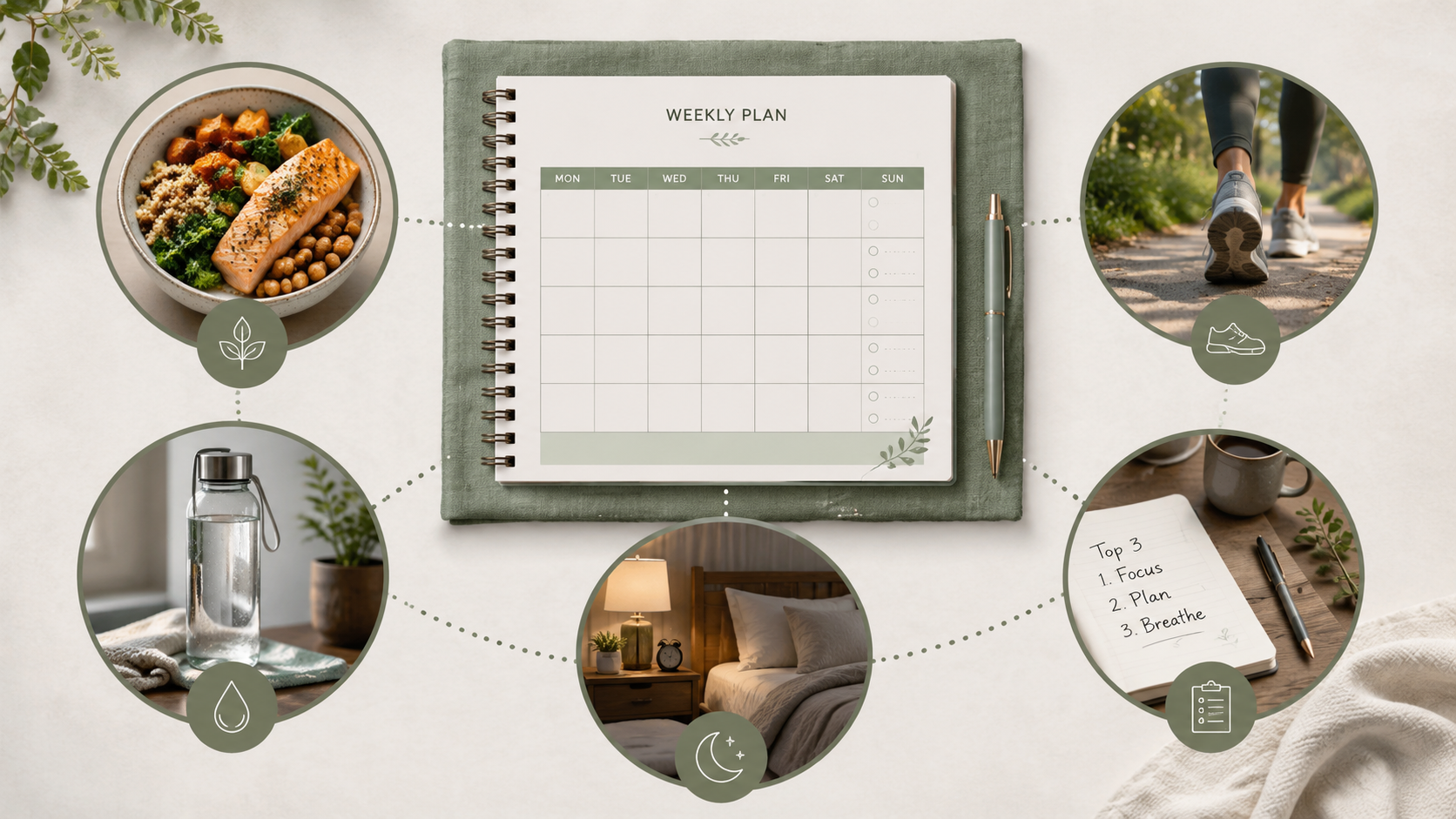
The easiest place to begin is with the things that have the biggest impact on the entire week. For example, start with food choices not built around random snacks. Randon snacks tend to lead to low energy, poor focus, and more expensive choices. That does not mean cooking a fresh dinner every night. It may mean making one dependable meal, keeping a couple of fallback options in the house, or cooking enough once to give yourself a head start.
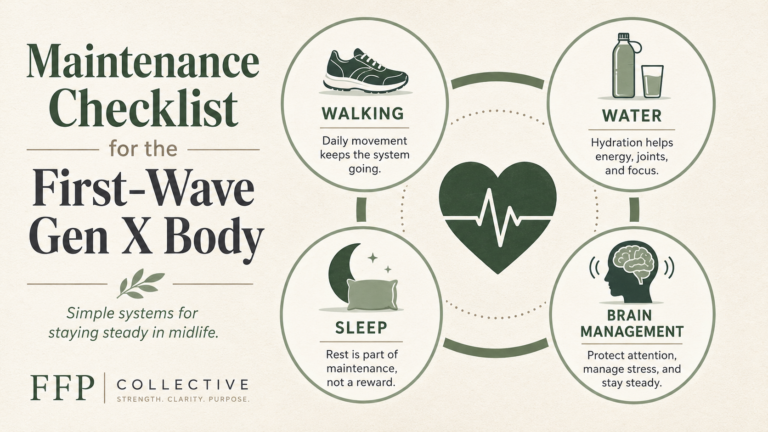
Add movement to your baseline, because sitting, stress, and a crowded mind can make everything feel heavier. It does not have to be a formal workout. A walk around the block, ten minutes outside, or getting up and moving before the afternoon slump can help your body from feeling forgotten. Add water for the same reason. It is easy to overlook until a headache, fatigue, or dry mouth show up, so the baseline may be as plain as filling the same bottle every morning and keeping it where you can see it.
Don’t forget about sleep because a tired week makes every other decision harder. You may not control the exact number of hours, but you can get a better night’s sleep by setting a stopping point. This will help with brain management too: writing things down instead of trying to hold the entire week in your head, stepping away from the noise for a few minutes, or deciding which problem actually needs your attention today. None of these choices are dramatic, and that is part of why they work.
A baseline is not punishment
The baseline is not a prison sentence. If you miss something, the answer is not to declare the week ruined. The answer is to return to the next available piece of the baseline. Drink some water, eat something useful, step outside, write down the next task, and go to bed. The goal is not to earn a perfect week. The goal is to make returning easier.
It is more important in midlife than it was when we were younger. There was a time when many of us could run a week on momentum. Back in the day, we called it “pulling the macho train.” We would push through and not think about the consequences. Later has arrived, but it’s not the end of the story. This chapter means maintenance has to become more honest. With a body less willing to pretend sleep, food, movement, and stress do not count, a baseline gives life’s pillars a place to land without turning into a full-time wellness project.
Weekly baselines will change with the seasons
A good baseline is not carved into stone. The week you are doing one thing may need a different structure from the week you are doing something else. Some weeks may need to be a smaller quiet week, while other harder weeks may reduce your baseline to the few things that keep you functional. Don’t think of it as lowering the standard, but matching the standard to reality.
One useful way to think about it is to separate the baseline from the stretch goals. The baseline keeps the week steady. The stretch goals are what you do when time, energy, and attention allow. For example, the baseline might be walking three times, keeping two dependable meals available, filling the water bottle each morning, and setting one evening aside to shut things down early. The stretch goals might include a longer hike, a new recipe, a full house project, or an extra writing session. This takes some pressure off because you are no longer calling the week a failure when the extras do not happen. You are looking at whether the foundation held.
Build the week around return points
A baseline becomes stronger when it has return points built into the day. Morning can be one: fill the water bottle, look at the calendar, and decide what actually matters today. Midday can be another: eat something that will carry you, step away from the screen, and take a short walk before the afternoon gets away from you. Evening can be the last one: put tomorrow’s first task somewhere visible, clear one small area, and shut down before the day turns into another hour of aimless catching up.
These do not have to be rigid routines. Think of them as places to re-enter the week. When life pulls you off course, you do not need to rebuild the whole map. You need a place to get back on the road.
What a better baseline can look like
A better weekly baseline should be pretty simple. One grocery trip with enough basics to prevent panic meals, two or three walks instead of promising yourself seven, keeping water and medication in the same visible place, or protecting one evening from work so the week has somewhere to breathe. The best baseline is not the most impressive one. It is the one you can still find when the week gets noisy.
Take advantage of seasons in which you can do more. Cook ahead, walk farther, clean the closet, write the extra article, and push the project forward. But the stronger system is the one that still works when you cannot do all of that. Baselines are not where ambition goes to die. They are what keep ambition from burning the house down.
Start with the week you actually have
If life is pulling at you from several directions, do not begin by building a more complicated schedule. Look for the smaller foundation. What meal keeps you steady? What kind of movement clears your head? Where does water need to sit so you remember it? What is one thing that helps you sleep better? What needs to leave your brain and land on paper?
Choose a few things, keep them visible, and let them be enough to hold the week together. Then, when the next week comes, adjust without starting over. A better baseline is not about doing less for the sake of doing less. It is about knowing what matters enough to keep doing when life gets loud.