What a Dutch Baby Can Teach About Nutrition
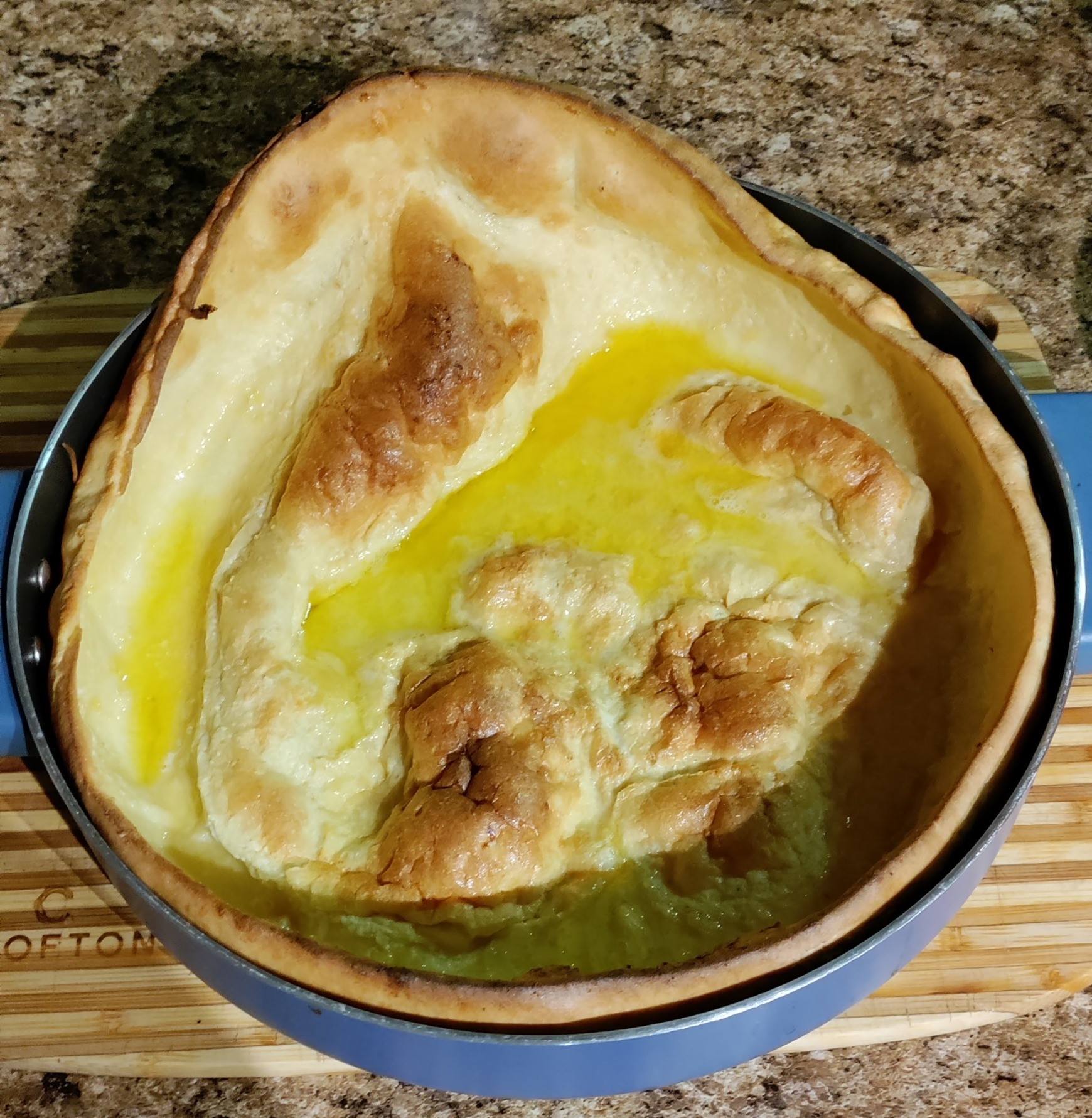
Sometimes nutrition looks a lot less dramatic than people want it to. It doesn’t always come in a bowl with a trendy name or a list of ingredients nobody can pronounce. Sometimes it looks like a Dutch baby coming out of the oven, puffed up, golden at the edges, rich with eggs, flour, milk, and heat. Something simple. Something satisfying. Something homemade and worth sitting down for.
That kind of food still has something to teach. The lessons I learned switching from baking with All-purpose flour to fresh-milled flour opened up a world of new lessons to be learned, even if I was pretty confident about making simple dishes to feed the troops. FMF teaches you to trust your senses to adapt recipes to what you are actually working with instead of whatever was done in the past. It keeps you in the moment.
One thing I’ve been thinking about lately is how often nutrition gets separated from appetite, comfort, pleasure, and real life. We talk about food as if it should only be functional, almost like it has to earn the right to be enjoyed. But that split does not help most people live better. In fact, I think it often makes eating more stressful, more disconnected, and harder to sustain. Food that nourishes you and food that satisfies you are not enemies. In real life, they often need to work together.
That’s part of what a Dutch baby reminds me of. It is not flashy, but it has presence. It asks you to slow down long enough to make it and long enough to enjoy it. It is built from familiar ingredients, but the result feels like more than the sum of its parts. And maybe that’s one of the things real-life nutrition should be doing more often: using ordinary ingredients well enough that the meal feels generous, steadying, and complete.
I also like that it doesn’t pretend to be perfect. A Dutch baby puffs where it wants to puff. It settles where it settles. It comes out rustic and irregular and still does exactly what it came to do. There’s something in that for me. At this age, I have less patience for food perfectionism and a lot more respect for meals that show up, satisfy, and make life easier rather than harder. A good meal does not need to perform. It needs to work.
Nutrition in real life has to make room for that. It has to make room for meals that are warm, filling, homemade, and grounded. It has to make room for food that feels like food, not just nutrients lined up for inspection. Yes, nutrition matters. Ingredients matter. Balance matters. But real life matters too. Hunger matters. Satisfaction matters. The experience of sitting down to something that tastes good and leaves you feeling cared for matters.
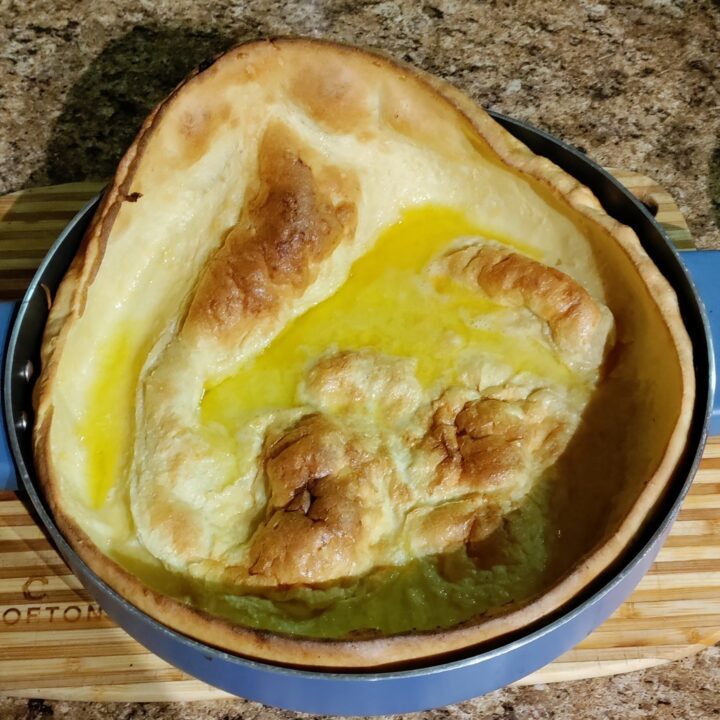
Simple Dutch Baby
A large, puffy, oven-baked pancake with a custardy center and crispy edges, made from a simple batter.
Ingredients
- 3 tablespoons unsalted butter, divided
- 3/4 cup milk, room temperature
- 3/4 cup (90g) all-purpose flour or fresh milled flour
- 3 large eggs, room temperature
- 3 tablespoons granulated sugar
- 1 teaspoon vanilla extract
- 1/4 teaspoon ground cinnamon
- 1 pinch kosher salt
- 1 pinch ground nutmeg
Instructions
- Preheat the oven to 400°F.
- Preheat the pan:When the oven reaches temperature, place 1 tablespoon of butter in a 10-inch cast iron skillet or dutch oven. Set the pan in the oven to preheat for 10 minutes.
- Melt the remaining butter: While the pan is preheating, place the remaining 2 tablespoons of butter in a microwave-safe bowl and heat in the microwave until fully melted, about 30 seconds. Let cool slightly.
- Make the batter: When there are about 5 minutes remaining in the preheating time, start the batter. This can be done by hand, using a blender, or food processor. In the jar or bowl, mix the milk, flour, eggs, sugar, melted butter, vanilla, cinnamon, salt, and nutmeg. Blend at medium speed until smooth and filled with tiny air bubbles, 1 to 2 minutes. Adjust the amount of milk used if using fresh milled flour.
- Bake:Carefully pull the pan out of the oven, pour the batter in and place it back in the oven. Bake until the center is puffy and the edges are crisp, 20 to 25 minutes. Serve warm, straight from the pan, adorned with your toppings of choice.Serving:
- Toppings can be as varied as butter, syrup, fruit, nuts, etc. This is a versatile dish that can be customized to your individual tastes.
Notes
Leftovers can be cut into slices and stored in an airtight container in the refrigerator for up to 3 days. Reheat on a baking sheet in a 350°F oven until crisp and heated through, about 5 minutes.
The type of flour you use will determine the amount of liquid you need to use. Additionally, feel free to adjust the sugar and butter. The point is for this simple dish to be something you add to your normal rotation.
That’s especially true in midlife, when a lot of us are trying to figure out how to eat in ways that support energy, steadiness, and health without turning every meal into a test. I do not believe shame helps people eat better. I do not believe anxiety improves nourishment. I do believe that whole food meals, repeated often enough, can change the way life feels. Not because they are perfect, but because they are reliable. Because they meet you where you are. Because they help you keep going.
A Dutch baby is not the whole story of nutrition, of course. But it is a good reminder that nourishment can still look warm, human, and deeply ordinary. It can still come from your own oven. It can still feel satisfying. It can still include pleasure. And none of that makes it less meaningful. If anything, it makes it more usable.
That’s the kind of nutrition conversation I want more of here. Less performance. More practicality. Less pressure. More steadiness. Food that supports your life instead of turning into one more thing you have to get exactly right. So yes, a Dutch baby can teach something about nutrition. Not everything. But enough to matter. Enough to remind us that real food, made and eaten in real life, still counts for a lot.
What’s one simple meal that still really does it for you?