Processed Food: When Processed Isn’t the ONLY Problem
In the ’80s getting food from the grocery store instead of the garden became the norm. Growing up in the inner city of Arkansas, it was just life, not the beginning of something bigger. Somewhere along the way, the word processed started getting treated like a curse word. A lot of what fills the grocery store now is not recognizable as food in the old sense.
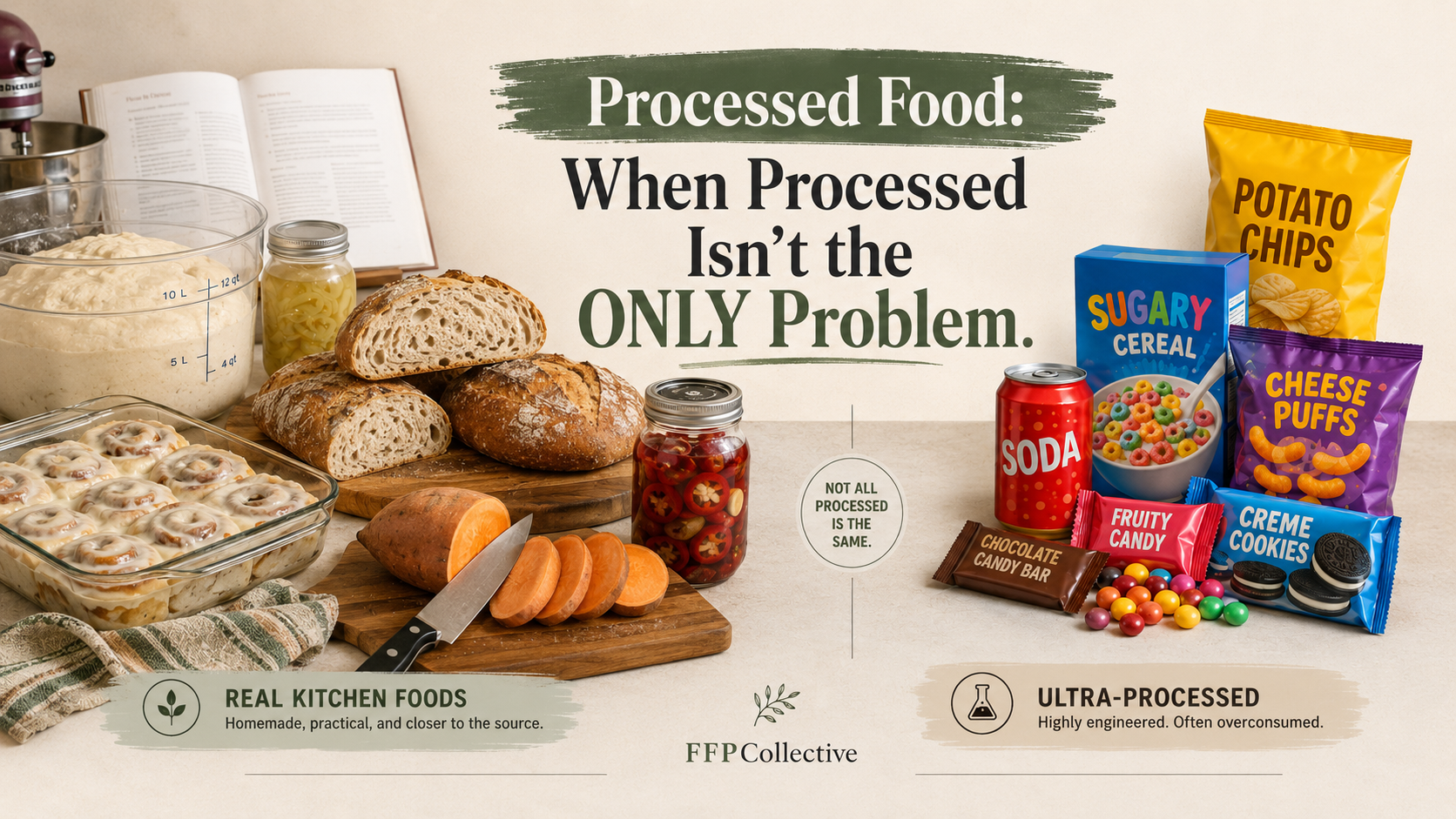
Engineered to be cheap, shelf-stable, and easy to keep eating. How modern food is processed before it gets to our table deserves a closer look. But if we are going to talk like grown folks, we have to be honest: just because food is processed does not always mean it’s bad for us.
Frozen vegetables, yogurt, and cheese are processed. Even the flour I mill is processed. The question is not whether human hands or machines touched food. The question is what kind of processing happened and whether the final food tastse good and helps you build a meal.
If it’s engineered, is it bad? Not necessarily. Farmers combining different types of crops is an example of engineering. Crop breeding and industiral food processing may be different, but taking something in nature and making something else is different than creating something in a lab. When food entered the laboratory is when things started to change.
Some good, and some bad, creates a crossroad of confustion in conversations about wellness and the point when talk about wellness gets a bit lazy. If someone did all the thinking before it got to the table why should I question it? On the other hand, taking real concern, turning it into a confusing slogan, leaves people standing in the grocery aisle feeling like everything they can afford is wrong.
Let’s be honest, the only thinking at times begins and ends with your wallet. If your budget says canned beans and frozen spinach, then canned beans and frozen spinach may be the thing keeping dinner from turning into a greasy bag from the drive-through. Simple common sense for the station you’re in at the moment. Your current reality versus what processing is not the issue.
The line between the field and the lab for food was forever blurred with the industrialization of food. Commercial food processing in the ’60s and ’70s took advantage of this when it adopted parts of the scientific study on what today is known as the bliss point, which makes the perfect mix of sugar, salt, and fat. This mix makes food taste better and easier to overeat. The dark side of this part is the processing turned some foods into a product that barely resembles food. Add enough salt, sugar, fat, and packaging psychology, and people are blamed for not having willpower against products designed to drain their willpower.
My thoughts on this matter are different. At the end of the day, we should be able to eat whatever we want to. A combination of whole foods and processed foods is what it is. Unless you live totally off the grid and have control of everything you grow, process, and eat, there is no way to avoid processed food. If you want to go with the popular talking points then eat more whole foods and limit ultra-processed foods.
Building a working kitchen filled with whole foods you actually like and a good to and for you versus a ton of UPFs can be a challenge. The trick is knowing what role food is actually playing. Is it helping you cook, or is it replacing real food with food-style products with no lasting benefits? Is it saving time? Is it a recognizable ingredient, or a side show distraction?
When you eat you should not only enjoy what you eat but not be ashamed to eat it. Eating ultra processed foods or UPFs is not about calling the pantry police and acting like everyone has endless time and money. Real food still matters, but so does real life. If a processed ingredient helps you put together a meal that supports you, use it and keep moving.
There is a big difference between a shortcut and a trap. A shortcut helps you get where you were already trying to go. A trap keeps you circling the same place and wondering why you feel worn out.
Processed is not always the problem with the foods you eat. The problem is the food system manipulating people to forget what real food is supposed to do: feed, satisfy, and help you keep going.
What are your thoughts on processed foods? What are some foods you have replaced in your pantry and what did you replace them with?