Real Food Reset: I Started This For Me
Week 1 — Awareness
I didn’t wake up one morning and decide to overhaul my diet.
I just got tired of feeling like food was running me instead of the other way around.
For most of my life, I’ve eaten through eras. Low-fat everything. Then low-carb everything. Then high-protein everything. Foods with bold claims stamped across the front of the package like a badge of honor: fortified, zero, light, heart healthy, high fiber.
But I also grew up before all of that.
I remember what food actually tasted like. I remember cereal before it was redesigned to be “part of a complete breakfast.” I remember bread that went stale because it didn’t have to last three weeks. I remember butter that tasted like cream, not like something engineered to spread straight from the fridge.
Somewhere in the 80s, things started to change. The flavors shifted. Snacks got louder. Colors got brighter. Everything seemed sweeter, saltier, more intense. And we were told it was better — improved, enhanced, fortified.
We were told if we just adjusted the numbers — less fat, more fiber, more protein, fewer carbs — everything would line up.
But the taste told a different story.
Somewhere along the way, we stopped asking if something was food and started asking what was added to it.
That shift matters.
The Moment
The shift didn’t happen in a grocery aisle.
It happened during COVID.
Like a lot of people, I had more time at home and more time to think about how I was eating. I signed up for the Naturally Slim program — now Wondr Health. It wasn’t a diet. It was more of a behavior modification program built around slowing down, noticing hunger cues, and changing your relationship with food.
Around that same time, I pulled out a grain mill and started baking bread from wheat berries.
Not flour from a bag — actual berries.
That’s where this really started.
The baking nerd details where I began baking a 70/30 loaf — seventy percent hard white wheat, thirty percent hard red. The hard white kept it lighter. The hard red added depth. Some loaves were dense. Some were beautiful. But they were mine.
When I cut into that first good loaf — steam rising, crust crackling — I tasted something I hadn’t tasted in a long time.
Wheat.
Not “wheat flavor.” Not soft, sweet, shelf-stable bread.
Actual grain.
At the same time, I was making yogurt in my own kitchen. Milk and culture. That’s it.
As I started eating more of what I was making — bread from berries, yogurt from milk, meals built from recognizable ingredients — something else began to shift.
Our grocery habits changed.
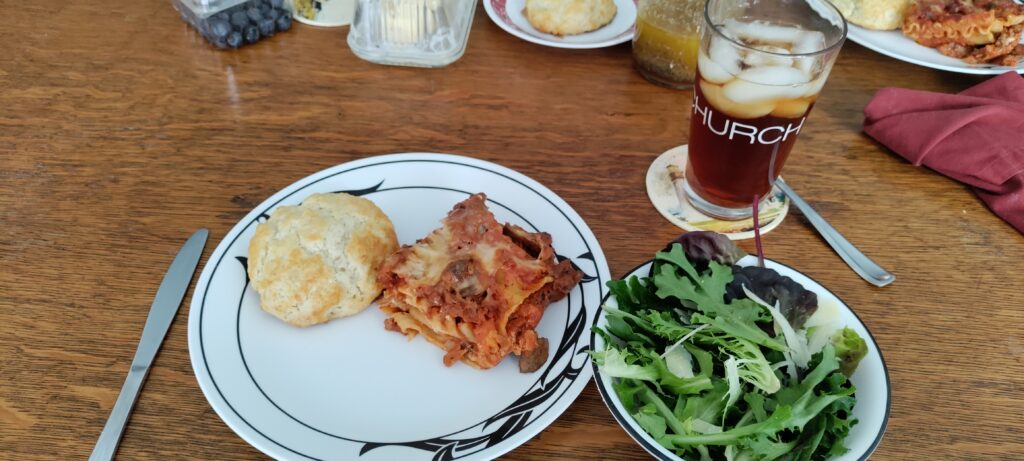
We bought fewer boxes. Fewer bags. Fewer things with claims on the front. We cooked more. My wife and my son were part of it too. Without making a big announcement about it, we started eating out less. Not because restaurants are evil. Just because home food felt better.
The flavor was different.
Not louder. Not engineered. Just deeper.
And then I noticed something I hadn’t planned for.
My body reacted differently.
I stayed full longer. Hunger felt clearer instead of urgent. I wasn’t prowling the kitchen an hour later looking for something else. Meals felt steady.
Within a year, almost a hundred pounds came off.
That wasn’t the goal.
The goal was to eat better. To feel steadier. To slow down.
The weight loss was a byproduct of attention.
That’s when it really clicked.
The difference wasn’t just taste.
It was response.
And once you notice that difference — between stimulation and satisfaction — it’s hard to un-notice it.
What Changed in My Kitchen
Paying attention changes patterns.
Meals built from ingredients — grain, protein, vegetables, fat — feel different than meals built from packages. Satisfaction lasts longer. Energy stays more even.
I’m 59. I’ve lived through every nutrition swing this country has thrown at us. I’ve watched “fat” become the enemy, then “carbs,” then anything remotely enjoyable. I’ve seen food rebranded more times than I can count.
What I haven’t seen much of is simplicity.
This reset isn’t a cleanse. It’s not a challenge. It’s not a 30-day anything.
It’s me getting reacquainted with food that doesn’t need a marketing department.
And yes — there were lifestyle changes that mattered. Slowing down when I ate. Paying attention to hunger. Changing how often we relied on restaurants. Those shifts deserve their own conversation.
We’ll get into the specifics of that when we move deeper into the wellness series.
This week isn’t about mechanics.
It’s about awareness.
What I’m Not Doing
I’m not counting macros.
I’m not cutting out entire food groups.
I’m not pretending I’ll never eat something from a box again.
And I’m not labeling food as good or evil.
I’m just noticing.
I’m noticing ingredient lists.
I’m noticing how I feel an hour later.
I’m noticing when something tastes engineered to make me keep going.
I’m noticing when a meal feels complete.
Because once you notice the difference between hype and nourishment, between stimulation and satisfaction, you can’t really go back to eating on autopilot.
The Invitation
This started as a personal experiment.
I wanted to see what would happen if I slowed down, paid attention, and built meals from ingredients instead of claims.
I’m not trying to be perfect. I’m trying to be awake.
If you’re curious what happens when you start paying attention too, I’ll share what I’m learning.
After decades of being told what to eat, I’m less interested in trends and more interested in remembering how to eat.
And that feels like a good place to begin.