10 Lessons I Learned While My Oven Was Down
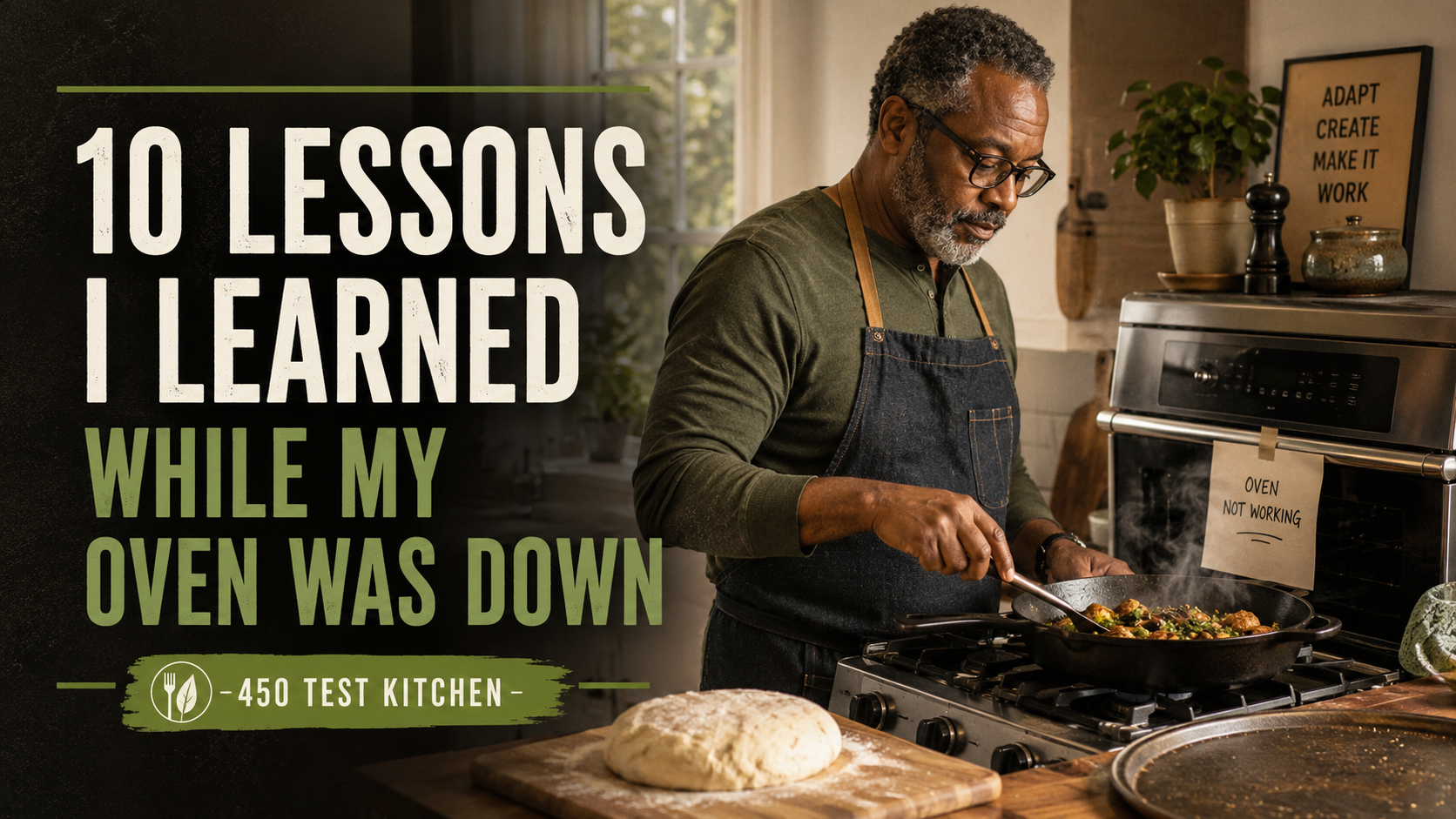
When my oven went down, I learned real quick how much of my kitchen depended on that one appliance. A working kitchen without a working oven still looks normal from the outside. The stove is there, the refrigerator is there, the cabinets are full, and the pans are stacked where they always are. But once you start trying to cook, you find out that more than half of what you normally do is suddenly off the table.
That may sound like an exaggeration until you want biscuits, cornbread, roasted vegetables, baked chicken, pizza, bread, casseroles, or anything else that needs steady oven heat. Cooking with only part of my usual setup made every trip into the kitchen for me and momma more stressful. I had to stop and think through what I had, what I wanted to cook, and how I could make it work without the oven. That little breakdown gave me a few lessons I probably should have learned earlier.
Lesson 1: An Oven Carries More Weight Than You Think
I knew I used the oven. I did not realize how much I leaned on it until it quit. A stove can still do plenty. You can boil, fry, simmer, sauté, and make a meal happen. But the oven gives you a different kind of cooking. It gives you space, steady heat, and the ability to put something in, set a timer, and work on the rest of the meal.
Without it, everything became more hands-on. I was standing over the stove more, watching the bottom of food more, moving pans around more, and thinking harder about meals that used to be simple. That was the first lesson. Sometimes you do not know how important a tool is until it is gone.
Lesson 2: A Limited Kitchen Makes You Think Harder
When everything is working, cooking can become automatic. You know what pan to grab, what temperature to set, and how long something usually takes. When the oven was down, automatic was gone. I had to look at every meal and ask, “Can I cook this on the stove? Can I use the broiler? Do I need to change the whole meal? Is this worth the trouble?”
That kind of cooking can wear on you because it is not just about food. It is decision fatigue. A meal that should be simple now has extra steps before you even start. But there was some good in it too. It made me pay attention to what each part of the kitchen actually does. It made me separate habit from necessity, and that is not a bad lesson for cooking or life.
Lesson 3: The Broiler Can Be Your Best Friend
The broiler saved me more than once. I have used the broiler to cook bacon for years, so that part was not new to me. Bacon under the broiler works well because the heat comes from the top, the fat renders, and you can get good color without standing over a skillet getting popped every few seconds.
Once the oven was down, the broiler became more than a bacon tool. It became the one part of the oven that still gave me direct heat. You can do some good work with a broiler. You can brown things, crisp the top of something, finish food that is already mostly cooked, and get a little color where the stovetop cannot give it to you. But you have to respect it. The broiler is not gentle, and it does not wait on you. Turn your back too long and your food can go from almost ready to open-the-window real quick.
Lesson 4: The Broiler Is Not Just a Hot Oven
One of the biggest things I finally connected was that the bake function and the broiler function are not the same thing. They may live in the same appliance, but they do not cook food the same way. The broiler cooks hot and fast from the top down. Baking uses steadier heat and gives food time to cook through. That difference changes what you can cook and how you need to cook it.
With the broiler, the top of the food gets hit hard. That can be great for browning, crisping, and finishing, but it can also mean the top burns before the inside gets done. With baking, the heat surrounds the food more evenly. That is why bread, cakes, biscuits, casseroles, and roasted foods usually work better in the oven. They need time. They need steady heat. They need more than a blast from above. It sounds basic, but having the oven out forced me to pay attention to the difference.
Lesson 5: Broiler Baking Is Possible, But Risky
I thought about trying to bake bread using only the broiler. I even worked out a few possible workarounds in my head. Move the rack lower, use a heavy pan, shield the top, watch it close, and maybe turn the broiler on and off to control the heat. Then good sense tapped me on the shoulder.
Could it work? Maybe. Could it burn fast? Absolutely. The broiler is useful, but it is not a replacement oven. It is too direct and too aggressive for most baking. Bread especially needs time for the inside to cook. If the top and bottom get too much heat too quickly, the outside can burn while the inside is still not right. I was curious, but not curious enough to waste good dough. Sometimes the lesson is knowing when not to test your theory.
Lesson 6: The Stovetop Can Do More Than Expected
There are a few oven foods that can be moved to the stovetop if you are willing to adjust. I tried par-cooking a pizza. The idea was not bad, but the result was not great. It started to burn before it fully cooked. That told me something useful. The stovetop can help, but it has limits.
You can use a covered skillet to trap heat. You can use lower heat and take your time. You can flip some foods. You can finish certain things under the broiler if the broiler works. But you still have to change your expectations. The stovetop is good at direct bottom heat. It is not good at pretending to be a full oven. That does not mean you cannot make it work. It means you need to know what kind of food you are dealing with before you start experimenting.
Lesson 7: Texture Is Where the Stovetop Falls Short
Some things can be cooked on the stovetop, but they do not come out the same. That was especially true with bread-type foods. Most breads will burn on the bottom before the rest gets done if you treat the stovetop like an oven. You can lower the heat, use a lid, move the pan around, and still fight the same problem.
The outside gets too much heat while the inside needs more time, and the texture suffers. That is the part people do not always think about. Cooking is not only about getting food hot enough to eat. Texture matters. Crust matters. Browning matters. Moisture matters. An oven handles those things differently than a burner does. When the oven was down, I could still cook and I could still eat, but I could not always get the same texture I wanted. That made me appreciate what the oven brings to the table.
Lesson 8: Repairing an Appliance Can Save Money
Once I started looking into the repair, it became clear that fixing the oven myself would be cheaper than calling someone or replacing the appliance. That does not mean everybody should repair their own oven. If you are not handy, or if you are uncomfortable working around wires, gas lines, or anything that could hurt you, pay for the service call. Peace of mind and safety are worth money. There is no shame in knowing your limits.
In my case, with the right instructions and enough patience, the repair itself was not complicated. The bigger lesson was that not every appliance problem means it is time to buy a new appliance. Sometimes the fix is smaller than the fear around it, and that is worth remembering with prices being what they are.
Lesson 9: The Instructions Were Easy. The Access Was Not.
ChatGPT helped me with step-by-step instructions, and the instructions were clear enough. The hard part was not understanding what needed to be done. The hard part was physically getting to the part. That is where the job stopped being neat and started being real. My age showed while bending over to get into the oven box and laying on my back to get to the wiring.
The screws were hard to reach. The old part did not want to come out. I ended up cutting part of it out with tin snips. Then I struggled getting the new screws in. That is the kind of thing instructions cannot fully prepare you for. A repair guide may tell you what to remove, show you the order, and explain the part, but it cannot make old screws cooperate. It cannot make tight spaces wider. It cannot give your hands more room. Sometimes the job is simple on paper and aggravating in real life. My body revolted against me the next day. I am not as young as I used to be.
Lesson 10: A Working Kitchen Is About Rhythm
The biggest lesson was not really about the oven. It was about how much a kitchen depends on rhythm. When everything works, you build habits around it. You know what you can cook, how long it takes, what meals are easy, and what tools you trust. When one major piece goes down, that rhythm breaks.
For a while, every meal required extra thinking. I had to work around the missing oven, change plans, and accept that some things were not going to come out the way I wanted. But it also reminded me that cooking is problem-solving. Our parents and grandparents cooked through worse than a broken oven. They made meals with what they had. They stretched tools, adjusted, and figured it out.
I am glad the oven is working again. I haven’t baked a loaf of bread in weeks and look forward to producing a fresh loaf. I missed the convenience, but I also missed the options. Having it back made the whole kitchen feel open again. And next time something breaks, I will still be aggravated, but I will also know where to start.